Description
About Tillandsia huarazensis
Tillandsia huarazensis is named for Huaraz, the town below the Cordillera Blanca in northern Peru. That places it among the highest-growing plants in the Tillandsia genus, and it shows in how tough the plant is.
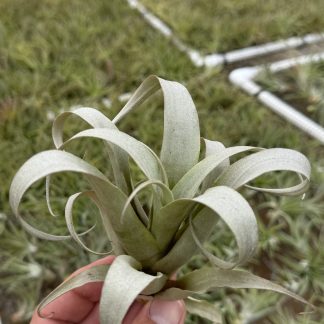
The rosette is open and symmetrical, built from narrow grey leaves that taper and recurve. Trichome cover is dense and even, so the plant keeps a consistent silver tone rather than greening up in cultivation.
Plants ship at 6 to 8 inches wide. That is a useful working size, large enough to stand alone on a shelf but not so large that shipping becomes awkward.
High-altitude Peruvian species remain thin on the ground in wholesale. Stocking one gives you something your competitors probably do not have.
Growing Tillandsia huarazensis: Care Guide
This plant evolved above 3,000 metres. Therefore it wants strong light and copes with cold far better than heat.
- Light: High light, including direct morning sun. Thin light produces a loose, stretched rosette.
- Water: Soak 20 minutes every 10 to 14 days. It is thoroughly drought hardy.
- Drying: Invert and shake after every soak. The narrow leaf bases pack tightly and hold water at the core.
- Airflow: Good airflow, and more of it in warm weather.
- Temperature: Very cold tolerant, from 35°F to 90°F. Sustained heat troubles it more than frost-free cold.
- Feeding: Feed monthly in spring and summer with diluted TillyBoost Fertilizer at quarter strength.
- Mounting: No soil. Mount on rock, cork or wood in a bright, airy spot.
- Pups: Offsets follow bloom. Separate at one third the size of the mother, or leave them to cluster.
See our Air Plant Care page, or browse our Rare Air Plants for more Andean species.