Description
About Tillandsia Lucille
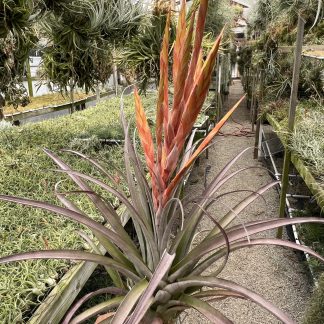
Tillandsia Lucille crosses ehlersiana with Tillandsia streptophylla, and both parents are bulbous, silver and heavily trichomed. The hybrid takes the best of each. It has the fat pseudobulb of ehlersiana and the dramatic curl of streptophylla.
The curl is the thing people buy it for. When the plant is dry, the leaves ringlet hard and pull inward. After a soak they relax and open out again.
That means the plant tells you visually when it is thirsty. Growers find it one of the easier large Tillandsias to read.
Silver trichome cover is dense across the whole plant. In strong light it reads almost white, and the pinkish flush at bloom sits beautifully against it.
Growing Tillandsia Lucille: Care Guide
Both parents are xeric. Therefore Lucille wants strong light, infrequent water, and above all a dry bulb.
- Light: High light. Direct morning sun is fine and tightens the curl. Low light produces a loose, floppy plant.
- Water: Soak 20 to 30 minutes every 10 to 14 days. Watch the leaves; heavy curl means it is ready.
- Drying: This is the critical one. The hollow pseudobulb fills with water, so always turn the plant upside down and shake it firmly. Water left in the bulb rots it from the inside, and by the time you see damage the plant is lost.
- Airflow: Strong airflow after watering. Dry within four hours.
- Temperature: Comfortable from 65°F to 100°F. No frost.
- Feeding: Feed monthly in spring and summer with diluted TillyBoost Fertilizer at quarter strength.
- Mounting: No soil, ever. Mount bulb-down or on its side so the bulb can drain. Wire rather than glue, because the plant gets heavy.
- Pups: Offsets emerge from the base after bloom. Separate at one third the size of the mother.
For more detail see our Air Plant Care page, or browse our Rare Air Plants for other bulbous hybrids.