Description
About Tillandsia latifolia leucophylla
Tillandsia latifolia leucophylla is the white-leaved variety of a widespread Peruvian species, formally described by Rauh. Of the four recognised varieties of Tillandsia latifolia, leucophylla is the one grown for its colour.
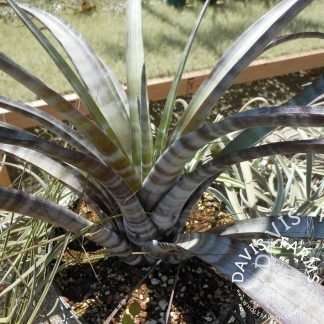
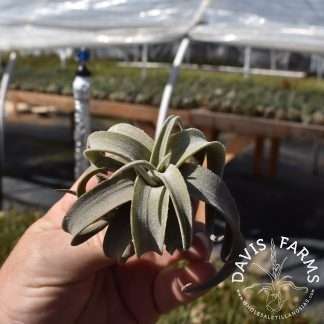
The leaves carry a heavy chalk-white trichome coat, considerably denser than the ordinary latifolia. The rosette is upright and stiff, and mature plants build a woody stem beneath.
Latifolia is native to Peru and Ecuador, and the species is famous for where it grows. It survives in the coastal lomas, some of the driest ground on earth, living on fog rather than rain. Some populations sit loose on sand with barely any root attachment at all.
We offer it from seedlings through to large plants. Because the white colouring intensifies with age and light, bigger plants show the character best.
Growing Tillandsia latifolia leucophylla: Care Guide
This plant evolved on fog in near-rainless desert. Therefore it is exceptionally drought tolerant, and overwatering is the main risk.
- Light: As much bright light as you can provide. The white colour is a light response and fades badly in shade.
- Water: Soak 20 minutes every 14 days. Frequent misting suits it better than heavy soaking.
- Drying: Invert and shake. The stiff upright leaf bases cup water against the stem.
- Airflow: Strong airflow at all times. It comes from a windy coastal environment.
- Temperature: Comfortable from 45°F to 95°F, and it takes cool, damp nights in its stride.
- Feeding: Feed monthly through spring and summer with diluted TillyBoost Fertilizer. Seedlings especially benefit.
- Mounting: No soil. Older plants develop a stem and are best wired upright on wood.
- Pups: Offsets form at the base and around the stem. Separate at one third size, or let it build a colony.
Our Air Plant Care page covers fundamentals, and more Peruvian species sit in our Rare Air Plants.