
Description
About Tillandsia kirchhoffiana
Tillandsia kirchhoffiana is a green, soft-leaved species from the humid forests of Mexico and Central America. It sits at the opposite end of the genus from the silver desert plants, and it is watered completely differently.
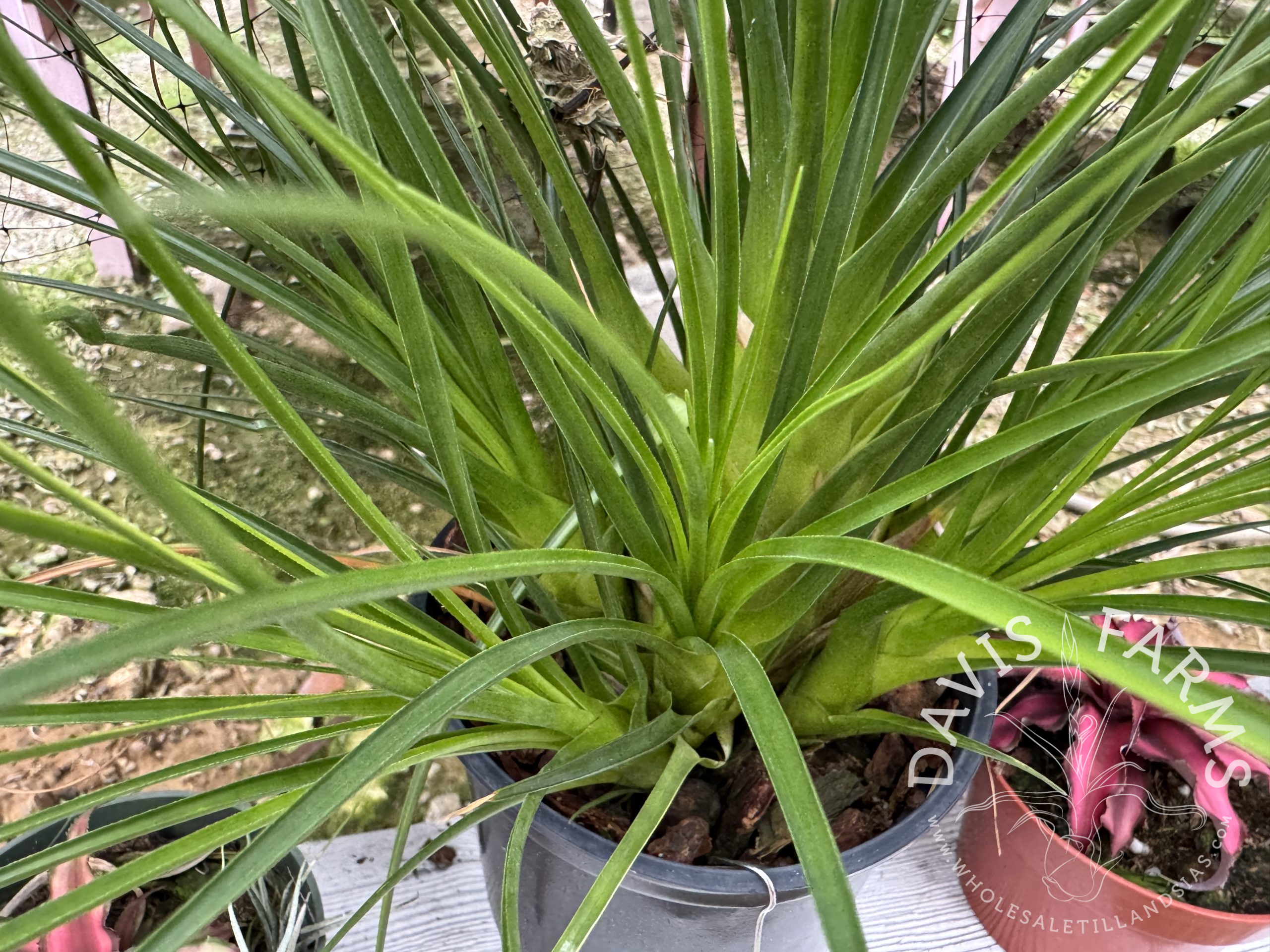
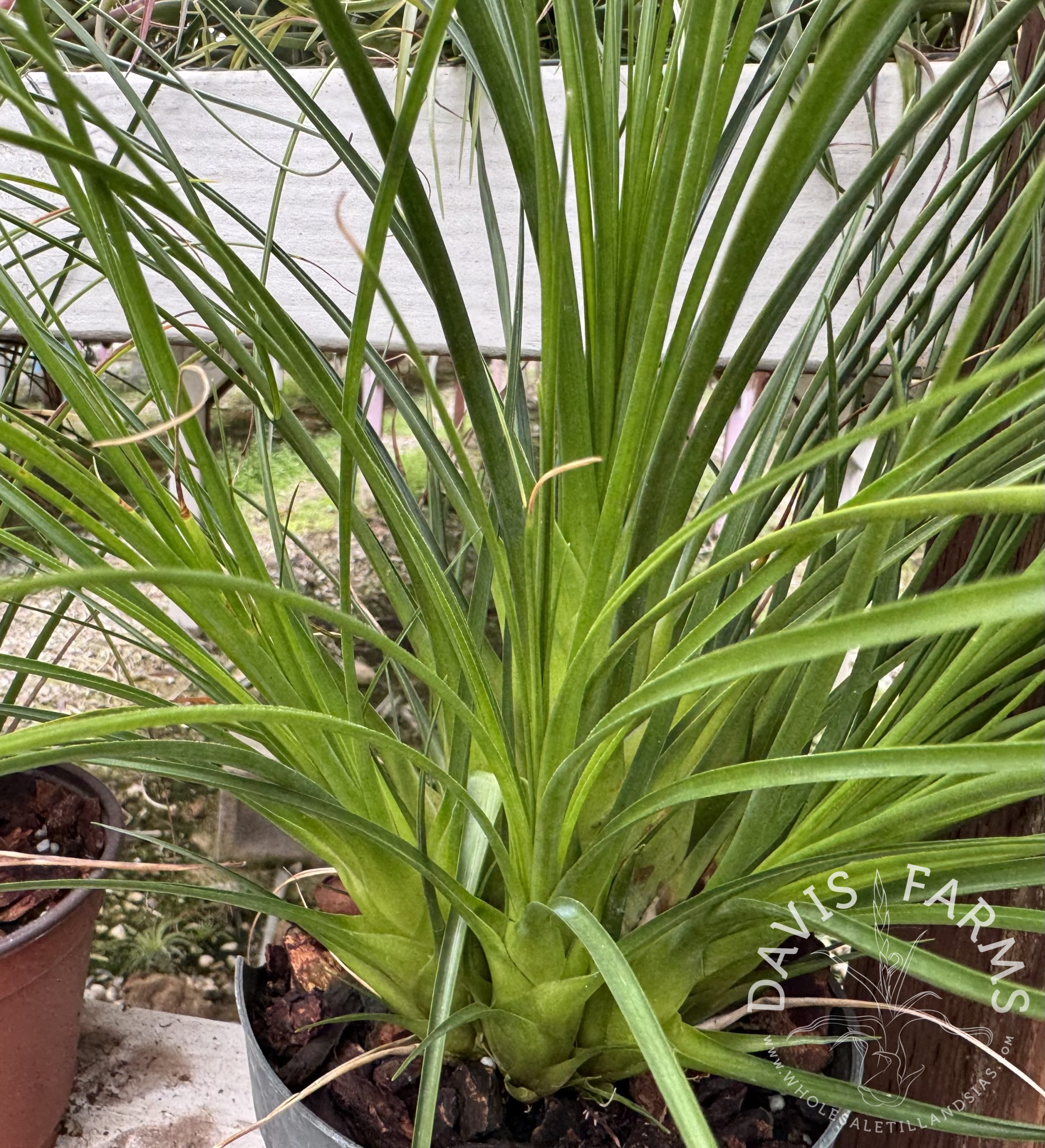
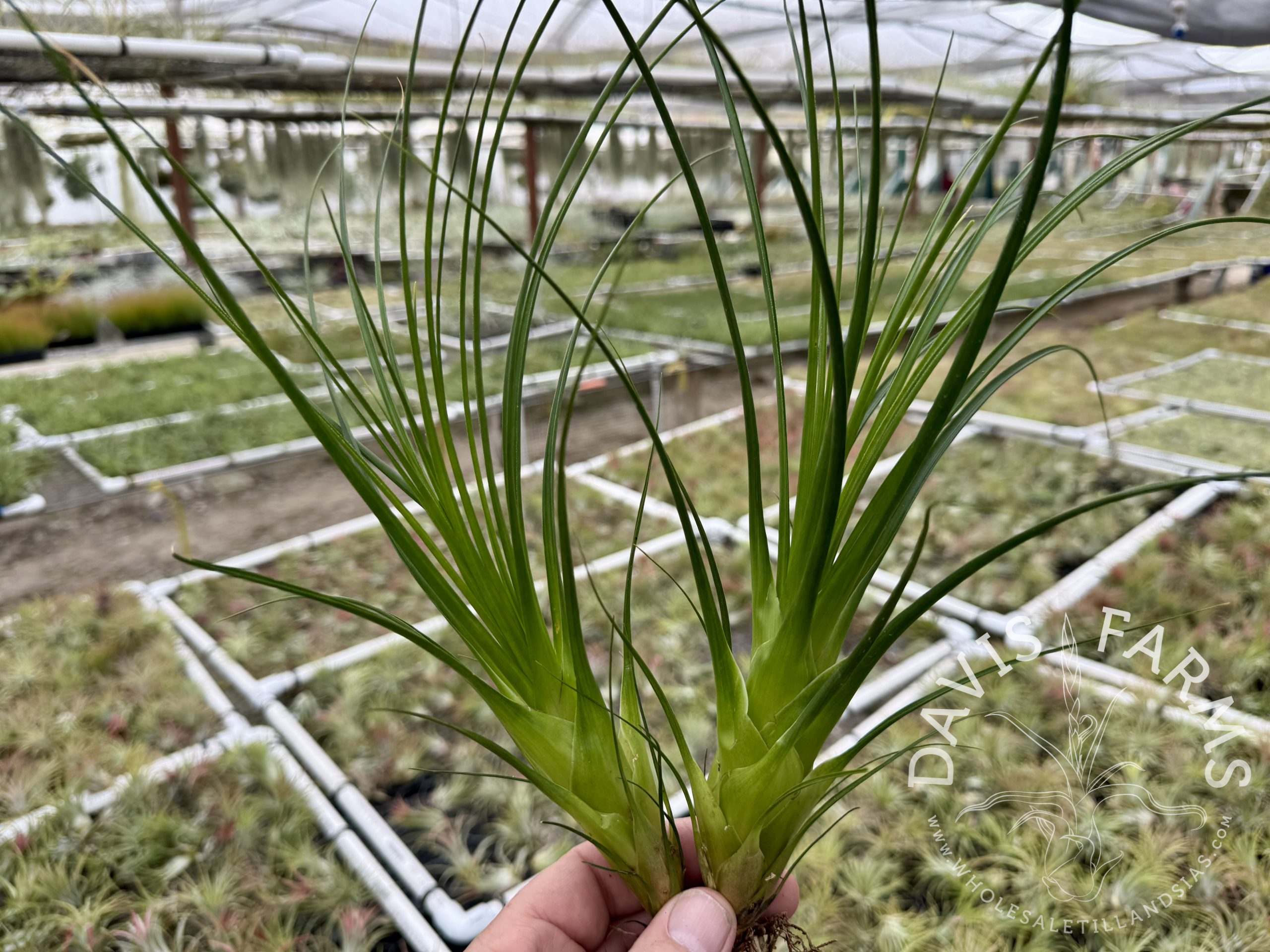
This is a tank type. The broad leaf bases overlap tightly to form a watertight well at the centre of the rosette, and the plant holds a standing reservoir of water there just as a bromeliad does.
The rosette is open and spreading, built from broad thin leaves that arch outward. Trichome cover is light, so the plant reads glossy green rather than grey, and the leaf bases flush soft red in good light.
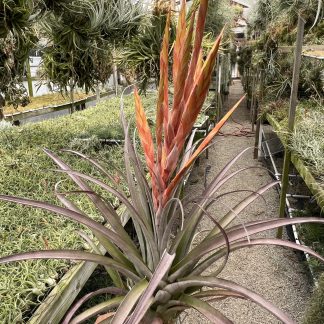
Plants ship at 10 to 12 inches with a branched inflorescence carrying pink bracts on multiple side spikes. Because it grows in shaded forest, it suits interior retail spaces that would starve a silver species of light.
Growing Tillandsia kirchhoffiana: Care Guide
Everything here follows from the cup. Therefore treat this plant as a bromeliad rather than as an air plant.
- Light: Bright indirect light only. Direct sun scorches the thin leaves quickly, so keep it well out of afternoon exposure.
- Water: Keep the central cup filled. Top up the well at the middle of the rosette and let the plant draw from it.
- Flushing: Empty and refill the cup weekly with fresh water to stop it going stagnant.
- Do not invert: Never turn it over and shake it out. That empties the reservoir the plant depends on.
- Airflow: Moderate airflow. It handles humidity better than any silver species you stock.
- Temperature: Comfortable from 60°F to 90°F. It dislikes frost and extreme heat alike.
- Feeding: Feed monthly with diluted TillyBoost Fertilizer at quarter strength, added directly to the cup water.
- Mounting: No soil. Mount level so the cup holds water, and allow room for the spreading rosette.
- Pups: Offsets follow bloom and come readily. Separate at one third size, or leave them to cluster.
As a tank type it belongs alongside our Bromeliads. Our Air Plant Care page has the fundamentals, and more green species sit in our Rare Air Plants.