Description
About Tillandsia usneoides curly orange flower form
Tillandsia usneoides is Spanish moss, the plant that drapes the live oaks of the American South. It is not a moss at all. It is a true Tillandsia, and it has the widest natural range of any species in the genus.
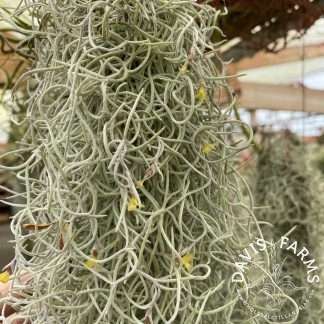
This is the curly orange flower form, and both parts of that name matter. The curly selection twists far more tightly than ordinary Spanish moss, so clumps look dense and springy rather than lank.
The orange flower is the rarer trait. Usneoides normally produces tiny pale green flowers that most people never notice. This form throws warm orange blooms instead, and they carry a light fragrance.
We ship it as small clumps of 12 inches and longer. It grows by lengthening rather than by rosetting, so a clump keeps extending as long as you feed it.
Growing Tillandsia usneoides curly orange flower form: Care Guide
Spanish moss hangs in humid air rather than clinging to desert rock. Therefore it needs far more water than most of our silver stock.
- Light: Bright indirect light. It grows under tree canopy in habitat, so avoid harsh direct sun.
- Water: Soak or thoroughly mist 2 to 3 times a week. This is the thirstiest plant we sell, and it browns quickly if neglected.
- Drying: Shake the clump out and hang it loose. Dense wet clumps rot from the inside.
- Airflow: Good airflow while it dries, but it tolerates humidity far better than a desert species.
- Temperature: Comfortable from 45°F to 95°F. It handles a wide range easily.
- Feeding: Feed monthly with diluted TillyBoost Fertilizer at quarter strength. Fed clumps lengthen noticeably faster.
- Mounting: No soil and no mount needed. Simply drape or hang it over wire, wood or a hook.
- Growth habit: It has no roots and never will. Divide a clump by pulling it apart with your fingers.
See our Air Plant Care page, or browse our Rare Air Plants for more unusual forms.