Description
About Tillandsia jequiensis
A word of honesty up front: the trade name “jequiensis” is applied to more than one plant. A formally described Brazilian species carries that name too, but what we grow and what our own records describe is a Tillandsia paleacea relative with flat, wide leaves, not the Brazilian plant. We’re naming this plainly rather than assigning a pedigree we can’t confirm.
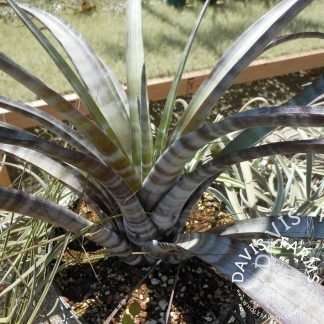
Whatever the final taxonomy, it’s a striking plant. It’s very rarely offered and not often seen in cultivation. Its wide leaves arrange into a strongly symmetrical rosette that reads as sculptural rather than shaggy.
Like its paleacea relatives, it grows without much of a root system. In habitat it lives on open sand dunes facing the ocean, catching moisture from the onshore breeze rather than rainfall.
That habitat is dry: under an inch of rain a year in some populations, offset by near-daily coastal dew. So a plant built for that extreme deserves a buyer who understands genuinely xeric care, not casual misting.
It ships as a single Small (5 inches and up), a single Large (7 inches and up), or a Medium clump with one to two pups. Older clump leaves can pick up a light algae film, which washes off easily.
Growing Tillandsia jequiensis: Care Guide
Run it as strictly xeric, since it comes from one of the driest habitats any Tillandsia tolerates. Soak 10-14 days, then invert and shake dry immediately; standing water is a bigger risk here than underwatering.
- Water: Soak 10-14 days, then invert and shake dry right away.
- Light: High light and strong airflow, mimicking open dune exposure.
- Feeding: Diluted TillyBoost Fertilizer monthly; go light, since it’s adapted to lean conditions.
- Algae: Wash or peel off any green film on older leaves.
- Grading: Small and Large singles, or a Medium clump with pups already forming.
Feed it TillyBoost Fertilizer sparingly, and see more dune and desert species in our Rare Air Plants category, or check the air plant care guide for xeric basics.