Description
About Tillandsia latifolia vivipara
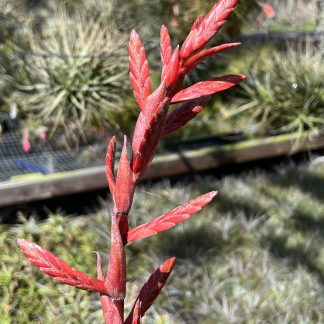
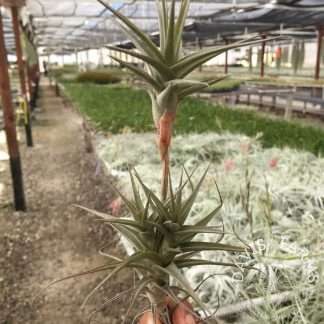
Tillandsia latifolia vivipara type 4 is a viviparous form of Tillandsia latifolia. Viviparous means it sprouts new plantlets directly on the bloom spike, so a flowering plant carries its own offspring on a stalk above the leaves.
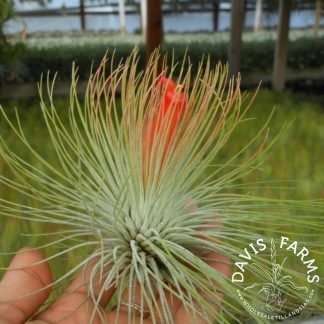
The foliage has a silvery shimmer, and the leaves are stiff and spreading like other latifolias. What sets this form apart is the vivipara habit, and type 4 is our most prolific clone of it.
The spike itself is pink-bracted with violet flowers. As the flowers fade, plantlets form along the stalk, and they can be left to grow in place or removed and mounted.
We grade it from 3-to-4-inch smalls to larges of 7 inches and above, and larges ship with a pup already on the spike.
This is a fast, easy plant that multiplies on its own. For a nursery it is a plant that pays for itself, and for a shop it is a talking point that customers ask about.
Growing Tillandsia latifolia vivipara: Care Guide
Coastal Peruvian desert means sun, sand and fog, so this form wants strong light, short soaks and fast drying. It is very forgiving, and it tolerates heat and dry air better than almost anything in the catalog. The spike plantlets take water from the mother, so leave them attached until they are a third of her size; removed too early they struggle. A plant with a spike full of plantlets is top heavy, so mount it firmly or grow it in a bowl. Cool, dry winter nights set the next spike, and a well-grown plant spikes every year.
- Light: Bright light with direct sun for part of the day.
- Water: Soak 15 minutes every 10 to 14 days.
- Drying: Invert and shake. Stiff leaves drain fast.
- Airflow: Good airflow after each soak.
- Temperature: 40°F to 100°F. It takes heat well.
- Feeding: Feed monthly with diluted TillyBoost Fertilizer at quarter strength.
- Mounting: Wire to a solid mount, or grow it loose in a bowl from our Air Plant Displays.
- Pups: On the spike and from the base. Leave spike pups until a third grown.
Read our air plant care guide, or browse more Air Plants.