Description
About Tillandsia fasciculata
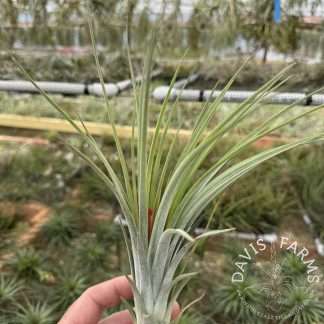
Tillandsia fasciculata is one of the largest air plants we grow, and one of the most widespread in the wild. It ranges from Florida through Central America and the Caribbean, where it is often called the cardinal air plant.
The leaves are long, stiff and green, and they rise from a broad base. In bright light the whole plant blushes to a purple tone.
The sheaths at the base are blackish, and that is normal for the species. New growers often mistake it for rot, but a black sheath on a firm plant is healthy.
The bloom is a tall, branched spike with flat red bracts and purple flowers, and it lasts for months. Because it is so large, one plant in bloom carries a display.
We grade it from 3-inch minis and seedlings through mediums and larges to 22-inch specimens. Some plants have slimmer bases than others. It can be potted in an orchid mix or grown bare like any other Tillandsia.
Growing Tillandsia fasciculata: Care Guide
Fasciculata comes from humid, seasonally wet forest, so it wants more water than a silver species and it resents drying out completely. Weekly soaks, bright light and a solid mount are the routine. Potted plants in bark grow biggest. A greenhouse with a wet floor suits it, and in a shop it holds up for weeks as long as the soaks are not skipped; the purple blush fades in low light, so keep display plants near a window.
- Light: Bright light with some direct sun. Sun brings the purple blush.
- Water: Soak 20 to 30 minutes every 7 days, or water potted plants weekly.
- Drying: Invert and shake. Broad leaf bases hold water.
- Airflow: Good airflow after each soak.
- Temperature: 40°F to 95°F. Florida plants take cool nights.
- Feeding: Feed monthly with diluted TillyBoost Fertilizer. Feeding supports the size.
- Mounting: Wire large plants to a solid mount, or pot in orchid bark.
- Pups: Two to four pups from the base after bloom.
Read our air plant care guide, or browse more Air Plants.