Description
About Tillandsia andicola
Tillandsia andicola is a miniature Tillandsia from the Diaphoranthema group, the subgenus of tiny, self-pollinating air plants that includes Spanish moss. It comes from the Andes of northern Argentina, where it grows at middle elevations on rock and scrub.
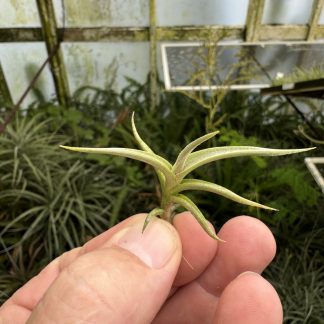
The leaves are thin, wiry and silver, and they point in every direction. A mature plant looks like a small silver tangle rather than a rosette, and that wild, untidy character is the appeal.
The flowers are purple and small, and they open from greyish bracts. Like the rest of the group, andicola sets seed on its own, and old plants carry little seed pods.
We sell andicola as seedlings, as pictured, at $5 each. It is a slow grower, and the plants ship small.
This is a collector’s miniature rather than a display plant. It is the kind of species that a specialist shop stocks in small numbers for customers who already have the common plants and want something rarely offered.
Growing Tillandsia andicola: Care Guide
High, dry Andean slopes mean strong light, big swings between day and night, and long dry spells broken by brief rain. Give andicola the brightest spot available, good air movement and a quick dip rather than a long soak. The wiry leaves dry in minutes, so rot is rarely a problem, but a slow grower this small is easily lost among bigger plants; keep it on its own mount where it can be watched. Cool nights over winter do it no harm and encourage flowering. Patience is the main requirement, because a seedling takes several seasons to become a clump.
- Light: Very bright light with direct sun.
- Water: Dip or mist every 7 days. Soak briefly in hot weather.
- Drying: Shake and hang. The wiry leaves dry in minutes.
- Airflow: Constant airflow.
- Temperature: 35°F to 95°F. It tolerates brief light frost.
- Feeding: Feed monthly with diluted TillyBoost Fertilizer at quarter strength.
- Mounting: Glue to a small piece of cork and leave it there for years.
- Pups: Slow. It also sets seed on its own.
Browse more Air Plants, or read our air plant care guide.